2022/09/23

International report concludes that the Spanish repression in Catalonia inspires dictatorships


A report by UNPO concludes that the Spanish repression in Catalonia inspires dictatorships. The 40-page report explains how lawfare and repression in Spain against Catalonia have inspired:

1. Charges of treason in Ghana against West Togoland separatists (intensifying from 2019).
2. The abuse in Algeria of counterterrorism to silence the self-determination of Cabilia (2021).
 3. The use in Pakistan of counterterrorism legislation against minorities (2020). 4. Russia's labeling of Crimean Tatars as extremists and terrorists (2019).
5. The suppresion in Turkey of Kurdish activists. (2020) 
6. The use of spy software in Iran against the Kurdish community.


1

Read more »

2022/09/19

The Council for the Republic becomes the Council of the Republic

This Sunday, September 18, an in-person Plenary meeting of the Assembly of Representatives was held in Canet de Rosselló, Northern Catalonia (under French rule). Respecting the established Agenda, the General and Operating Regulations were debated and approved with 93 votes in favor.

Spokesman Pere Cardús spoke on behalf of the report that he has drawn up on the General and Operating Regulations of the Council for the Republic. His intervention has opened the process of debate and amendments. Cardús recalled that the Assembly of Representatives "does not aim to make codes per se but to make an independent State in the form of a Republic". Cardús explained that the Regulation "is a facilitating document, made for understanding and cooperation" and that it will help the Council "to understand us and not to watch over us".

The speaker explained that the Regulation is a text that must also facilitate "a system of understanding between the Government, Local Councils and the Assembly of Representatives" and that it must allow "to draw up a joint strategy for all the bodies of the Council for the Republic ". During the debate on the amendments, the speakers convinced the Government and ended up withdrawing the amendment on the name of the Council. So, the change in the nomenclature of the republican institution has been approved: the Council for the Republic is now called the Council of the Republic. The Government has asked for a special speaking turn to warn that this change will be, in logistical terms, progressive in the coming months.


32 new Local Councils become official once President Puigdemont has given them the Letter of Commitment


The legitimation steps for a Local Council, regulated in the Framework Document for the Impulse of "Local Councils for the Republic", are as follows:

- first, transversal people from a locality/village/district come together and create a driving group 

- afterwards, they are in charge of deploying the Local Council in their local area (networks, territory, local institutions...).

- once the Local Council is present in the locality, an open process is carried out with the citizens and a democratic board is chosen with the tools that the Council makes available to them. 

The local Councils for the Republic that have already signed the "Letter of Commitment" drawn up by the Council for the Republic, which determines, among other issues, the political objectives and purposes of the local Councils and their principles of operation, will receive it signed and in hand by the President of the Council, Carles Puigdemont, at this event.


Read more »

2022/09/12

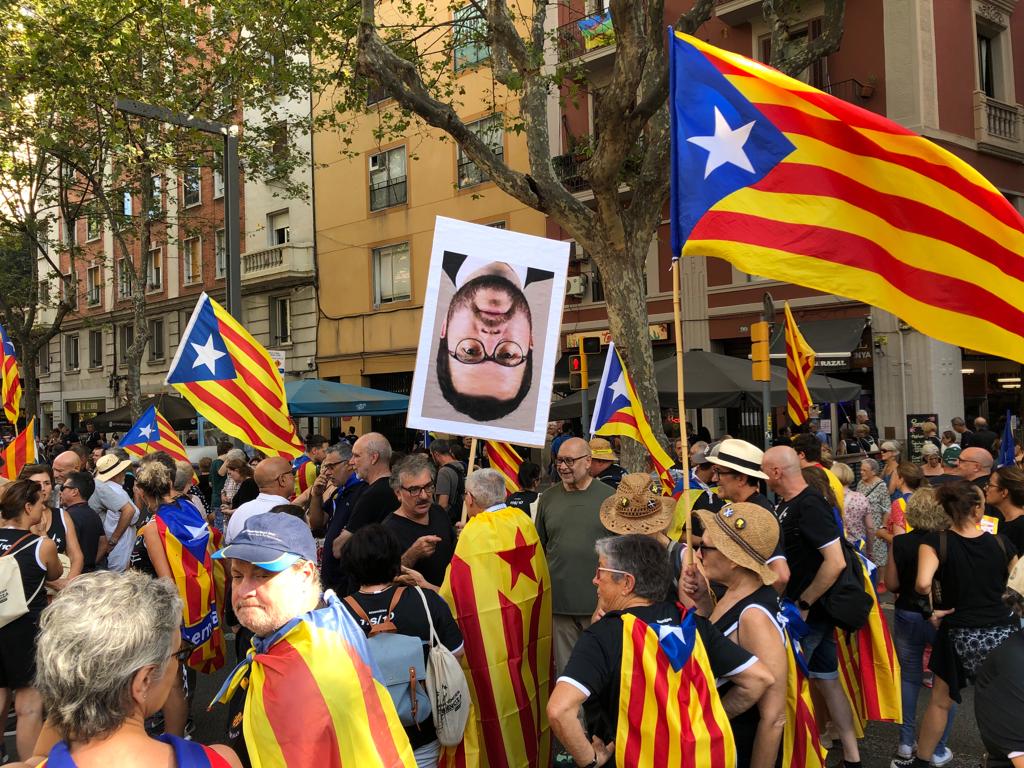
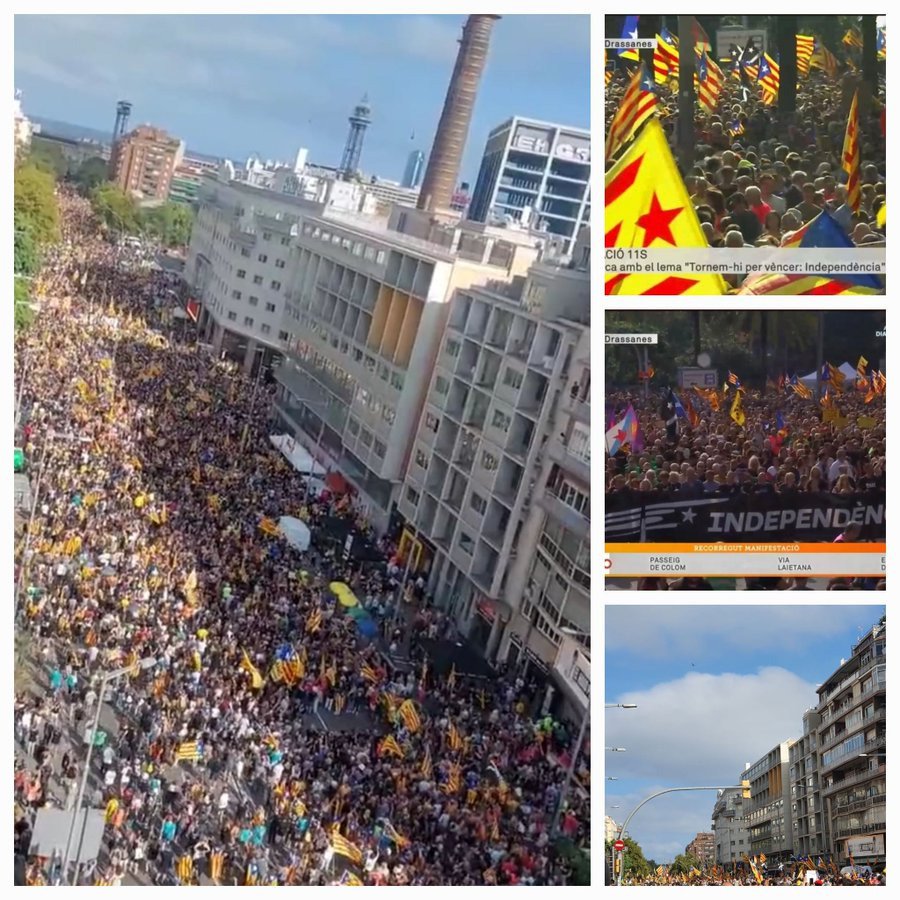
We're back: Massive political demonstration for Catalonia's Independence attended by 700,000 people


700,000 people gathered in the annual National Day pro-independence rally in Barcelona, according to the the organizing grassroots organization, ANC.  local police. Thus, the march was joined by 300,000 more people than last year, when the organizers estimated that 400,000 had marched in the streets. According to local police, the figure was 150,000, which is also higher than their calculations in 2021.

Every September 11, the attendance in the demonstration has been one of the key facts to know the level of engagement among Catalans over the independence campaign. The rally in 2014 marks the peak number of attendees, with 1.8 million, according to the local police, which stood for almost a quarter of the total population in the country. Yet, these numbers have been declining especially after the referendum and independence push in October 2017, with the pandemic also playing its role.

The rally began in Paral·lel avenue and ended in the Estació de França station, by the Ciutadella Park, where the Catalan parliament is located. The atmosphere was at all times cheerful and peaceful, with chants of independence, against governing parties, and some attendees supporting exiled president Carles Puigdemont. You can see some pictures of the rally here at the Catalan version of VilaWeb.

Independence or elections

When the event ended, ANC’s president Dolors Feliu demanded “independence or elections” to the two parties in cabinet, which are also favoring a split from Spain. During her speech, she said that 5 years after the 2017 independence referendum many people have run out of patience and she hinted at the creation of a new party, while many rally-goers spontaneously chanted “government, step down.”

Yesterday’s rally and Feliu’s ultimatum imply a move forward by the ANC in a delicate political moment, when ERC and Junts are negotiating a way not to derail the government agreement, although Junts is considering the possibility of leaving it. There is still a lot of legislation ahead, although next year there will be local and Spanish parliamentary elections, and a possible economic recession is looming and will shake the foundations of all political institutions.

President Aragonès did not attend the rally “because it is against [pro-independence] parties and not against Spain.” This is a major evidence that campaigners for a split with Spain are divided between those prioritizing talks with Madrid, including Aragonès, and those who say confrontation would be a much more effective way ahead. Indeed, the official manifesto for the protest, organized by grassroots organization ANC, criticizes the handling of the independence campaign by the parties leading it. It is the first time since 2015 that a Catalan president fails to attend the march.

Read more »

2022/08/27

Hundreds of people gather in Folgueroles and burn Spanish flags


The event was called by the Civil Disobedience movement and consisted mainly of fun events (theatre, debates, music with Musicians for Freedom). Catalans for Independence, the Committees for the Defense of the Republic of Osona and Action for Independence have participated in the events. Among them some hooded men have entered the town hall where they have unfurled a banner.

Read more »

2022/03/29

Amnesty International Report 2021/22 denounces that Spanish Human rights violations continue against Catalan national minority


Amnesty International Annual Report 2021/22 continues to denounce that Human rights violations in Spain continue, especially in Catalonia "Investigations into allegations of unlawful use of force by law enforcement officials during the Oct 2017 protests in Catalonia remained open". Catalan pro-independence grassroots leaders"spent almost four years in detention, following an unjust conviction on sedition charges in connection w/ peaceful protests and the 2017 referendum on Catalan independence". President in exile and MEPCarlesPuigdemont was arrested in Sardinia following illegal procedures by the Spanish judiciary, and subsequently released. Spain's GagLaw remains in effect 6 yrs after its implementation, despite promises of change by the current Spanish government. Human rights violations in Spain continue, and the heirs of Francoism keep their impunity in a so-called "democracy".

Link to the report


Read more »

The Council of Europe : the Spanish government has not complied with any of the 19 recommendations made to it for to improve the transparency or to prevent corruption

Bosnia and Herzegovina: GRECO calls for efficient coordination and firm  steps to implement anticorruption reform - News

The Council of Europe suspends the Spanish state in the fight against corruption. This is stated in the report prepared by the Group of States Against Corruption (GRECO) and published today, in which it can be seen that the Spanish government has not complied with any of the nineteen recommendations made to it for to improve the transparency and functioning of the administration and to prevent its corruption.
GRECO points especially to the police and considers its progress in building an "ethical infrastructure" to be "disappointing". The text notes that the Civil Guard has made "some progress", but does not see any "concrete improvement" in the case of the National Police. On the political front, GRECO regrets that the state has not taken any steps to strengthen transparency in the case of advisers or to establish a strategy to mitigate the risks of corruption in the case of senior officials. In the same vein, he sees no progress in the recommendation to ensure that the Transparency and Good Governance Council has "adequate independence, authority and resources to function effectively."

The report notes that the state has also made no progress in establishing rules on the relationship between senior officials and lobbies, or in recommending the expansion of public information on the assets of senior officials, or in overseeing possible conflicts. of interest.

With regard to gauging, GRECO regrets that the recommendation to amend this "special process" has not been implemented so as not to "obstruct" the proceedings in cases of high-ranking officials accused of corruption.

Read more »