2018/06/14

"Catalan process is not populist", states Meindert Fennema, expert in European populism

The Emeritus Professor at the University of Amsterdam and political scientist, Meindert Fennema, spoke with the CNA about the Catalan independence process. According to this recognized expert in populism throughout Europe, the Catalan process is far from populist, and he explains why such a comparison is false. Not only are the historical roots of both very different, but while populism "started as an anti immigration movement", "for historical reasons, Catalans have always embraced their immigrants". Moreover, populism is traditionally anti-government and against European Union integration; "a populist would not trust any government, neither Madrid nor the Generalitat (the Catalan Government’s official name)", he emphasized. 

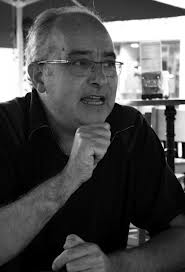
Meindert Fennema
However, the Catalan independence movement has always been democratic, supportive of granting more powers to the Catalan Government and open to inclusion within Europe. Dr. Fennema goes onto debunk the myth that the Catalan independence movement is similar to the stance adopted by the French populist and extreme-right party Front National, headed by Marine le Pen; although this is a myth spread by a small minority. The Dutch expert pointed out that given the religious and political differences it is "nonsensical" to say that the Catalan movement looks like Le Pen’s; it is "not true", he insisted. He admits that there are elements of radicalization in Catalonia’s independence movement; however he explains that they represent a small part and they come from the "fringe" aspect of being a cultural and linguistic minority, like that of the Frisian movement in his home country The Netherlands. Finally, he explains why Spain is a more corrupt country than Holland, and how best to fight against corruption today. 


The Catalan process has on many occasions been likened to populist movements by Spanish nationalists, who have even compared it to Nazism. The MEP of the Spanish nationalist UPyD party, Beatriz Becerra, sent a letter on October 8 to the 751 Members of the European Parliament in which she compared the Catalan self-determination process with what happened in "Italy and Germany during the twenties and thirties of the twentieth century." Following this incident the German MEP Ingeborg Grässle, told the that they asked the UPyD MEP for an apology for using an "inappropriate and false" simile and because to "trivialize" Nazism "is a disgrace to victims".

Only a few weeks later the leader of the Catalan Socialist Party (PSC), Miquel Iceta, made a similar comparison regarding the plebiscite elections that the President of the Catalan Generalitat ,Artur Mas, is planning to call as ‘de facto’ referendum on independence taking into account the Spanish Government’s blocking attitude for a mutually-agreed vote,. According to Iceta, the plebiscite “reminded him” those elections behind the rise of Adolf Hitler in 1933. The PSC leader, however, later corrected this and said that "any comparison with Nazism is not accurate."

These comparisons are inadequate for Fennema and even "ridiculous". According to the Dutch Emeritus Professor, the Catalan independence movement cannot be described as populist, and his first reason is that the two share very different attitudes towards immigration.

"For historical reasons, Catalans have always embraced their immigrants"

While "populism started as an anti immigrant movement" and became later "anti European" with a common ground in "nationalism", the Catalan movement, on the other hand, was pro-immigration. Furthermore, Spain "had always exported labour rather than imported it", making inclusion with Europe advantageous. Fennema points out that "for historical reasons, Catalans have always embraced their immigrants", inducing them to "learn Catalan and become Catalan". He argues that this "open-minded strategy" to including immigrants within Catalonia is very different to one adopted by a populist movement. He points out it is a mutually-advantageous relationship, given that "the biggest enemy of Catalonia is Madrid", so any one with a similar attitude "is welcomed”. Moreover from the other perspective, "immigrants would benefit from more independence, because Catalonia is a fairly wealthy nation", and the "rest of Spain is not".

"A populist does not believe in any government, neither Madrid nor the Generalitat"

Not only are the historical roots and attitude to immigrants very different, but the Catalan process is far from populist in its attitude to government. While the Catalan process seeks self-governance, European populism is anti governments of any kind. He admits that "there may be populists in Catalonia" but "most Catalan parties are not populist".

The Catalan process has also been compared to extremist political parties, including that of the French far-right party Front National, led by Marine Le Pen. Dr. Fennema rejects this comparison however, pointing out that to say that because both are "nationalist" does not make them the same, this is a simplistic comparison. "It is very nonsensical to say that since the Catalan movement is a nationalist movement and Le Pen is a nationalist movement", they are similar; "that is not true". He explains the two movements have different political and religious backgrounds; "actually Catalan nationalism is very republican" unlike the Front National, and while the latter has "very strong catholic roots" in contrast to the Catalan movement.

If anything, the Catalan process is better compared to one of an ethnic minority, and he uses the Frisians of his home country The Netherlands as an example. "The Frisians have always had a good contact with the Catalans", according to the Dutch Emeritus Professor, as both are "a cultural minority". While there may be "elements of radicalization" in both, he feels this to be a "fringe aspect" and represent a minority within these movements.

European populists are "ethnic nationalists" opposed to the"transfer of power to Brussels"

Fennema identifies European populists as being "ethnic nationalists" who want to close their borders to immigration, and do not want their nation to "transfer power to Brussels". This is unlike what is happening in Catalonia, which has an open stance towards immigration and wants to increase European political and economic integration. This definition fits more the attitudes of parties such as the Front National, or the UKIP party of Nigel Farage in the UK, which share similar views regarding immigration and corruption policies. For Fennema, and other experts in the field, such as Sarah de Lange and Sjoerdje van Heerden, authors of the book 'Not that different after all: radical right parties and voters in Western Europe', it is a mistake to simply warn the public of the dangers of such attitudes, what is needed is to understand why they are gaining popularity and now they are being treated as "normal". Another dangerous consequence of this, the experts point out, is that as the right-wing becomes more mainstream, the centre parties are being pushed into more radical policies in order to maintain the balance.

Regarding their presence in the EU, UKIP, (which has representation in the British parliament) is in the Europe of Freedom and Democracy group in the European Parliament, shared with the Italian Five Stars Movement, led by David Borelli. This October, the Euro-sceptics were about to lose their place when a MEP left, leaving them short of the 7 members of different countries required for representation. In the end however, the position was maintained when Polish MEP Robert Jaroslaw Iwaszkiewicz joined his party with those of Farage and Borrelli. However, Marine Le Pen did not join and she simply shares an operational budget with a few other MEPs.

Spain "was always focused on becoming a part of Europe" 

Fennema recalls that the particularities of Spain mean that the profiles of the Front National or UKIP cannot be applied to Spanish parties. This is both because Spain "was always focused on becoming a part of Europe", and also because unlike England and France, it has "always been a country which exported labour rather than imported it". Moreover, the very different history makes the two incomparable; the experience of the Civil War and Franco’s dictatorship were key to preventing the rise of populism in Spain, said the Emeritus Professor, "because the Spaniards do not want any other kind of extremism". He concludes that while the "Partido Popular [People’s Party] is a legacy of Francoism, yet it has always behaved democratically", though "not always completely" he adds.

"Corruption is stronger in Spain... because in Holland we have stronger institutions"

The rise of populism could be explained by citizens losing confidence due to corruption increasingly leading states. In conclusion, Dr. Fennema compared corruption within Spain and his national Holland. In his opinion, strong institutions are key: there is more corruption in Spain, "not because Spanish people are worse or more immoral than Dutch people" but because "in Holland we have stronger institutions". The expert from the University of Amsterdam believes it is through "checks and balances" that we must lead the way forward, to "struggle against corruption by establishing strong institutions that check each other". 

Related articles:

Comparing Catalonia's self-determination democratic process with the Nazi regime has become one of the arguments the Spanish nationalists have been using over the last two years, repeated in extreme-right television stations and even at the Spanish Parliament. Such an offensive and dishonest comparison outrages most of the Catalan society because of its total unfairness in describing the current democratic and peaceful self-determination process and for trivializing Nazism and the suffering of its victims – including hundreds of Catalans who died in concentration camps. Now, the controversy has reached the European Parliament. Read more....

Help Catalonia is an association that receives no subsidies whatsoever from the Spanish state, the Catalan government or indeed any other organisation. We, the people who work in this project, do so on a voluntary basis and for no financial gain whatsoever.
If you like the task we are performing and would like to help us carry on our undertaking you may make a donation through bank account No. IBAN ES69 0049 4751 4421 9506 0811 
Or you may also make a donation via PayPal clicking the button "Donate" . THANK YOU

Read more »

2016/02/16

“No one forces you to speak Galician”

I always try to avoid conflicts that are condemned to gridlock from the start. But sometimes when I hear absurd things I have to respond to them.


I’m not against any language or nation, but I can’t stand hate speech and absurd phrases that are put in the heads of simple-minded people. The maxims they repeat later, even if they sound funny, can be dangerous.

Even though the following conversation I had with a Galician is pretty common, it still makes me think about things a little:

Someone approached me and asked me a question that I didn’t understand. He seemed to be a normal guy and really seemed to have a question. I could not have known that he was Galician. I guess that’s not something that I could guess by looking at his hairstyle or the way his lips moved when he said certain words, because I’m not Sherlock Holmes.

I politely told him that I hadn’t understood him and I asked if he could repeat his question. Without thinking, I asked him this in Catalan, because it’s the language I usually use around here. It had never crossed my mind that the words I spoke out of politeness were rather like bait for a fish—a fish full of hate and frustration toward the culture that this man was in the midst of.

“You make me speak Catalan,” he started to shout. “In Galicia we don’t make anyone speak Galician and here you always make everyone speak Catalan.”

“Who makes you?” I tried to figure out where his problem was coming from, but the man was just shouting and it was impossible to have a fruitful conversation.

“Speak to me in Galician or Mandarin if you know it, because the more languages we know, the richer we become.” I tried calming him down but there was no way to communicate with him, because he just kept repeating the same words. Finally, I shrugged my shoulders and I left, so we wouldn’t waste our time.

I regret not having pressed him to give me an answer to my question about who was making him speak Catalan (all Catalans, I guess...) and how exactly they were pushing him around to speak it. I surmise that neither the obligation nor the pressure to speak Catalan were very onerous, because this Galician man didn’t seem to know a single Catalan word, not even for a courteous gesture or a rude insult.


Anita Janczak


Read more »

2015/03/28

Hate Speech against Catalans after Plane Crash

The recent tragedy around Germanwings flight 9525 crash that killed all 150 people has elicited shocking hate speech on Twitter and other social media aimed mostly at Catalans—but Germans and French are on the receiving end as well. In the small sample of hate tweets we are posting here, written by people in Spain, the users congratulate themselves on the fact that many Catalans died in the crash, going as far as wishing them slow and painful deaths. Anti-Catalan hate speech lawyer association Drets (Rights) announced that it has already pressed charges against 38 Twitter users responsible for 55 hate tweets.


Here is a translation of a small sample of the tweets:


“The plane crashed because fuel is expensive,
and, good catalufos (despective for Catalan) that
they are, they peed in the fuel tank cause it's cheaper.”

“Volareee uooo Volareee uooo, except if I'm Catalan,
then I crash and crumble.”

“Three hundred and twenty (sic) cheapskates less that
will boo at the anthem during the final.”

“About the plane crash, I think it's great if there were Catalans in it.”

“Plane full of Catalans and Germans crashes in France. #winwinwin.”

“@Pianelo: Let's see, let's not over-dramatize, cause the plane was
transporting Catalans, not people. SPAIN”

“I hope that plane ran over a few Frenchmen as well.”

“I think it's great if 42 Catalans are dead.”

“I hope a plane full of Catalans crashes against a rock and they
all suffer a slow and painful death @apuntem CATALUFOS.”
Note: @apuntem is a Twitter account that tracks anti-Catalan
hate speech.

“I don't know what happened with the damn plane
full of Catalans, but too few died.”

“I hope all those Catalans in that plane #Germanwings.”

“What's 1000 Catalans dead in a plane crash?
TOO FEW.”


Read more »

2014/12/11

The study and learning of Catalan outside the region


With Franco’s victory, many intellectuals and scholars of Catalan went into exile and set-up centres aimed at maintaining the culture in many points of the world. It was a new impulse for the study and learning of Catalan which continues to this day. In 2000, the Ramon Llull Institute was created with the aim of promoting the Catalan language and culture abroad. Nowadays, the network of lecturers in Catalan reaches 107 universities in 29 countries over the five continents, with more than 5000 students registered on the courses.


Franco’s victory during the Civil War, and the constitution of the dictatorship, caused a multitudinous exile which affected all sectors of the populous, Catalan intellectuals and language scholars. In this way, at the same time as the Catalan language and culture were repressed in their own region, due to the initiatives of the exiled intellectuals, various cultural centres appeared all over the world, which were aimed at cultivating and maintaining the Catalan culture in spite of the adversity of the time. Cities like Paris, Perpignan, Mexico, Buenos Aires and Santiago de Chile became, during this period, the Catalan cultural referents and represented a new impulse in the trajectory of the study and learning of Catalan outside its region, which still lasts to this day.

During the second half of the twentieth century different societies, which were normally tied to the university ambit, were created all over the world. These were aimed at the study of the Catalan language and culture. The principal activities of these societies were the redacting and publication of studies about various aspects of the Catalan language and culture and the organization of congresses and encounters. In 1954, the Oxford Anglo-Catalan Society was created which had, amongst its members, British and exiled Catalan scholars like Josep Maria Batista Roca, Joan Mascaró Fornés and Joan Gili Serra. In 1968, in the context of a discussion in Strasburg, the International Association of Catalan Language and Literature emerged which was officially founded in Cambridge in 1973.

Every three years the association organises an international debate about themes related to Catalan philology and publishes its acts; it also publishes the scientific magazine ‘Estudis de Llengua i Literatura Catalanes’ every semester and distributes amongst its members regular information about work sessions and publications on the theme. In 1978 the ‘Associazione Italiana di Studi Catalani’ was created in Italy, following the line initiated by the rest of European Catalan associations and, the same year, during the first ‘Col·loqui d’Estudis Catalans de Nord-amèrica’ [North-American Debate about Catalan Studies], the North American Catalan Society was also created. This entity takes on an important promotion task of Catalan culture in this country and, as well as organizing a triennial debate, it published the ‘Catalan Review: International Journal of Catalan Culture’. In 1983 the Deutsch-Katalanische Gesellschaft gathered for the first time in Karlsruhe, and in 1987 they held their inaugural reunion in Frankfurt-am-Main. In 1997, this association changed its name to Deutscher Katalanistenverband, although the Catalan equivalent of both names is the German-Catalan Association. The task of these entities has been recognised during the democratic era with awards like the Saint George’s Cross or the Ramon Llull Prize, and today they form part of the International Federation of Associations of Catalan, which is tied to the Ramon Llull Institute.

The Ramon Llull Institute is a consortium that was created in 2000 and which actually is formed by the Generalitat de Catalunya, the Government of the Balearic Islands, the Government of Andorra and other institutions. Its principal objective is the exterior promotion of the Catalan language and culture, ‘in all its modalities, subjects and means of expression, as well as its promotion and teaching outside the linguistic domain, taking into account its modalities and variants. The Institute has three differentiated areas: Creation, Literature and Thought, and Language and Universities’. The Ramon Llull Institute is an integrated member of the Ramon Llull Foundation, which is constituted by the Andorran Government, the Ramon Llull Institute, the General Council of the Eastern Pyrenees, Alguer and the Network of Valencian Cities, and its headquarters are in Andorra.

With regards to the projection of Catalan culture, the role of the Institute is structured around various axes. On the one hand, it centres its task around universities, be these in the Catalan speaking regions or abroad. In 2006, 7.000 students in more than 200 centres were receiving classes in Catalan language, literature and culture. Nowadays, the network of lecturers in Catalan reaches 107 universities in 29 countries on the five continents, with more than 5.000 students registered on the courses. Another of the activities linked to the university world is the support to cathedras or centres of Catalan studies, like the Centre of Catalan Studies of the Sorbonne University, the Research Centre in Catalan Studies of the Queen Mary University in London, the Joan Coromines Cathedra of Catalan Studies in the University of Chicago, the Cañada Blanch Centre of Spanish Contemporary History of the London School of Economics and the Catalan Research Centre of the Goethe-Universität in Frankfurt.

Out of the university ambit, the Institute also offers support to one hundred-and-fourteen Catalan Communities Abroad: these are private entities who aim to promote Catalonia outside the language’s linguistic domain and to support the Catalan community who live abroad.

Over the last few years, the Ramon Llull Institute has undertaken initiatives with a quite significant social and media impact, amongst which we must point out the presence of Catalonia at various international editorial fairs. In November 2004, a Book Fair was opened in Guadalajara (Mexico) which had Catalan culture as its star guest. Three years later, the international projection of Catalan culture had reached one of the most important pinnacles of its history when it was the guest culture at the Frankfurt Book Fair, which is the most important one in the world in this field.

Read more »

2014/12/05

Attempt at ‘linguicide’ during Franco’s dictatorship

The repression of Franco’s regime is often seen from its most cruel point of view, that of the unpunished murders, the inexplicable disappearances or the arbitrary tortures. The repression and persecution of the regime had, however, more subtle forms of political influence. The censure penetrated into all aspects of daily life and, markedly, into the language, the text books destined for learning, the publications and radio broadcasting. Everything was under the control of the censor, the regime’s institutions and those who supported the ‘Falange’ party.
The law approved by Franco’s government, on April 5th 1938, when Franco’s troops penetrated the Catalan soil, left the Statute of Autonomy of Catalonia (passed by the Constitutional Courts of the Spanish II Republic) without effect. As a consequence, the Catalan language, which was official, together with Spanish, was left out of the Parliament of Catalonia, the Administration, school and University. Its public use was prohibited and it was consigned to home life, which meant it was pushed back into a situation of diglossia, that is, where Spanish was predominant over Catalan. Catalan was choked and hidden and its public use was tauntingly despised. The region was covered with posters and signs where one could read ‘If you are Spanish, speak Spanish’, ‘If you are Spanish, speak the language of the Empire’. If a citizen was heard speaking Catalan in a public space, he was addressed with phrases like ‘Speak in the Christian tongue’ or ‘Let’s see when you stop barking’. Public signs with offensive sentences like ‘Prohibited to spit and speak in Catalan’ could be read.

The historian Borja de Riquer considers that ‘Franco’s regime tried out a ‘Spanishisation’ and assimilation policy in Catalonia by imposing the Castilian culture and language as the only official ones’ and he recalls a service from March 16th 1939 from the undersecretary of Public Order: ‘The regional languages must be prohibited when they do not properly serve a greater ambient or a particular greater sphere of promotion of the principles of the Movement and the work of the Government’. 

The ‘Catalanophobia’ and the obsession to eliminate any vestige of ‘Catalanity’ reached the ridiculous extremes that Josep Benet gathers in ‘Catalunya sota el règim franquista’ [Catalonia under Franco’s regime]. Thus, he explains that the sign of Hotel Sabadell in Burgos had to be covered up, to hide its name, in spite of the fact that it had no tie with the toponym, but that it reflected the name of the owner: Just Sabadell. This man, who was pushed by the ambient, had to renounce his surname because of the analogy with the city in the Vallès area. An even more significant event, which is gathered in the same work, is that immediately after the occupying fascist troops entered into the city of Barcelona, the popular Catalonia square became the ‘Spanish Army Square’ (also known as ‘National Army Square’ in other documents of the time).

In this context, many prominent personalities had to go into exile because of their ideas, which were contrary to those of the winners. With regards to the language, the most paradigmatic case is, without a doubt, that of Pompeu Fabra (Barcelona, 1868 - Prada, Conflent, 1948), who was the author of the official ‘Gramàtica catalana’ [Catalan grammar] of the IEC (1918) and of the ‘Diccionari general de la llengua catalana’ [General dictionary of the Catalan language] (1932). Franco’s regime was especially hard upon Fabra’s work, in a way that when, in 1943, the first books – those of Jacint Verdaguer – in Catalan were allowed to be published, under the supervision of Josep M. Cruzet, the condition was that they not be published in accordance with the rules of the Institute of Catalan Studies. Therefore, they were published as if they were written in a language without codification.

The concealed policies of the regime also greatly damaged the Catalan language. Thus, in 1939, the Governing minister Ramón Serrano Súñer nominated Luis de Galinsoga as director of ‘La Vanguardia (Española)’, which was the most important newspaper published at that time in Barcelona. Always with the support of General Franco, of whom he was the panegyric and biographer, Galinsoga came from the direction of Sevilla’s ‘ABC’ and had stood out due to his written pieces and blatant anti-Catalan manifestations. In 1959, a popular campaign, headed by the Catalan people, managed to get Galinsoga expelled from the helm of the newspaper, as a repulsive reaction against the phrase ‘all Catalans are shits’, which Galinsoga had pronounced while attending a church service given in Catalan.

The debate about the attempt to murder Catalan by Franco’s regime again became centre stage during a discourse of King Juan Carlos, on April 23rd 2001, during the delivery of the ‘Cervantes Prize’ to the writer Francisco Umbral: ‘Our language was never an imposed one, but one of encounters; nobody was ever forced to speak in Spanish: it was the most varied people who made the language of Cervantes their own, out of free will’. The King’s words caused an enormous consternation, especially taking into account that it was a text prepared by the ministry of Culture of the government of José M. Aznar.

The consequences of the linguistic prohibitions and persecutions of the Spanish dictatorship still continue to this day. As the philologist Joan Solà, who won the Prize of Honour of the Catalan Letters 2009, has said, ‘the poorness of present day Catalan only comes from the fact that it has not been able to be taught as a normal language and, therefore, has not been able to make the student long to read good authors, which is an excellent way to acquire a rich and precise language’. In Benet’s point of view, ‘the nation, individual and language is the same thing (...) It is like separating the blood from the body. The language is spiritually as strong as blood. The Catalan people have always been politically subdued’.

More about discrimination of Catalan here


Linguicide?


Dr. Joan Badia About the author of this article for Help Catalonia Special Collaborators On February 4th, 2010 the BBC reported the death of the last speaker of Bo, a language in the Andaman Islands, India. With the death of this woman, an entire language disappeared, together with a culture and a way of relating to nature. Every time...

Another attack against the Catalan people


About the author of this article for Help Catalonia Dr. Juan Carlos Moreno Cabrera Spanish Linguist and Professor at the Universidad Autonoma de Madrid The recent verdict of the Spanish Supreme Court, which establishes that the Spanish language must be the language of teaching, together with Catalan, in Catalonia’s educational...

Help Catalonia is an association that receives no subsidies whatsoever from the Spanish state, the Catalan government or indeed any other organisation. We, the people who work in this project, do so on a voluntary basis and for no financial gain whatsoever.
If you like the task we are performing and would like to help us carry on our undertaking you may make a donation through bank account No. IBAN ES69 0049 4751 4421 9506 0811 
Or you may also make a donation via PayPal clicking the button "Donate" . THANK YOU

About Catalan language


What is Catalan? Catalan is the language of Catalonia. It had already evolved from common Latin by the 9th century and belongs to the western branch of the Romance languages. Also: What is Catalan? A language or a dialect of Spanish? Where is Catalan spoken? The linguistic domain extends over 68,000 km2 in four different...

English isn’t spoken in the United States


Let’s imagine for a moment that Barack Obama’s government in the United States decides that the language spoken there is “American” and has nothing to do with English. Sure, it is clear that there are differences in pronunciation and vocabulary between the English spoken in the British Isles and in the USA, but nobody, especially not...

Judge removes custody of 4-yr-old from mother for having brought her to Catalonia


A Tenerife judge took custody of a 4-year-old girl away from her mother because of the supposed linguistic barriers that moving her to Catalonia, Ripollet near Barcelona in this case, imply. According to a report in the newspaper El Punt Avui, the ruling of the District Judge in Güímar, Tenerife, says that because the parents do not...

Linguistic discrimination in Europe, the catalan case


The General Representative to the EU of the Government of Catalonia delivered a speech on Wednesday last on the occasion of a Conference held in the European Parliament on linguistic discrimination in the EU, with an emphasis on the Catalan case. A report entitled “Linguistic discrimination in Europe, the Catalan Case”, which had been...

Spanish Supreme Court insists Spanish must be teaching language in Catalonia if requested by one pupil


 In appeal, the Spanish Supreme Court (TS) has sided with the family who requested their son to be taught in Spanish in a public school, alongside Catalan. Despite the Constitution not advocating pupils had “the right to be taught in Spanish”, but only stating they had “the right and duty to know Spanish”, a dozen families have requested...

More about discrimination of Catalan here


74-Year Old Kicked Out of Train for Speaking Catalan: Rosa Parks Did Not Surrender, Neither Will Catalonia


On 5 December an employee of Spanish railway operator RENFE expelled 74-old Josep Maria Sagrera and his 4-year old grandson from a train because he dared to address her in Catalan. The employee shouted “I hate Catalans, and now, because I say so, you are getting out!”, she made the train stop, and kicked out both. The incident took...

A six-month prison sentence, a 1,000 euro fine and his driving license suspended for speaking in Catalan


Carles Mateu Blay, who is native of Almenara (Castelló), was retained for more than three hours during a breath test in Almassora last June. The reasons why he was held were speaking in Catalan and refusing to speak in Spanish to two police agents from Guàrdia Civil. Finally, he was sentenced to jail for six months for disobedience...

"I was expelled from the Spanish Parliament for speaking Catalan"


My name is Alfred Bosch, I am a Catalan and I am member of  Parliament at the Spanish Congress, representing a pro-independence coalition, headed by the Catalan Republican Left. On April 11th, our three representatives were expelled from the Spanish parliament. Why? Because we were speaking our native tongue, we were speaking in...

Spanish Education Minister against Catalan Schools


The huge controversy caused by Spanish Education Minister Wert’s efforts to undermine the Catalan school system, and his new law to “improve education quality” hides something more than a simple attack to our language. Indeed, this minister-hooligan has other goals in mind.     Reading the draft, we can see Wert's...

Council of Europe urges Spain to conduct judicial proceedings in Catalan


The evaluation report by the Council of EuropeCommittee of Experts  is a clear textshowing Spain is not doing its duty. Catalan language is being harassed in the judicialproceedings. As the report itself says: “On the basis of the observations made bythe Committee of Experts in its second evaluation report, the Committee ofMinisters...

Spanish minister Wert: a 1926 precedent


The policy of Spanishizing, or even culturally colonizing Catalonia, is nothing new. Not even Spanish Minister of Education Mr Juan Ignacio Wert's proposal of relegating Catalan to an optional language in Catalonia. The historical document above recently referred to by journalist @AntonioMaestre, publishes a Royal Decree which includes...


Help Catalonia is an association that receives no subsidies whatsoever from the Spanish state, the Catalan government or indeed any other organisation. We, the people who work in this project, do so on a voluntary basis and for no financial gain whatsoever.
If you like the task we are performing and would like to help us carry on our undertaking you may make a donation through bank account No. IBAN ES69 0049 4751 4421 9506 0811 
Or you may also make a donation via PayPal clicking the button "Donate" . THANK YOU

Spanish Education Reform Would Suit Dictator Franco

Parents, teachers, civil society and Catalan government all oppose Spanish Education minister Wert's education reform. Catalan education association Somescola considers the Wert education reform made public yesterday would be in keeping with the times of the anti-Catalan Franco regime. The Catalan education platform Somescola considers...
Read more »

'The Guardian' sees the Catalans as ‘people under threat’ by Spain

The British newspaper The Guardian has produced a very interesting interactive map based on the newly released "Peoples Under Threat" index from Minority Rights Group International (MRG). This index is an annual report that uses statistical data to identify situations around the world where communities are at risk of mass killing. It...
Read more »

Read more »

2014/12/03

Spanish Government insist on comparing Catalan independence movement with Nazism

On the same day, both the Spanish Justice Minister, Rafael Català, and the 'number 2' of the governing People's Party (PP), María Dolores de Cospedal, compared Catalonia's self-determination process with the Fascist and Nazi movements in Europe's 1920s and 1930s. Without directly mentioning Catalonia, Català stated in a public conference in Madrid that "Rousseau's thesis about national sovereignty" is being "substituted" with those of the "Nazi ideologist Carl Schmitt", who proposed "overruling the democratic law" through "a charismatic leadership and the mobilisation of masses on the street to mix them up with the entire society and make the strength of accomplished facts to overrule democratic law". 

Spanish Minister of Justice
According to Català, this is "particularly worrying and refers to ill-fated memories and precedents that we all know about". A few hours after the Justice Minister's statement, the PP's Secretary General compared the President of the Catalan Government, Artur Mas, with the European leaders "who thought they had a higher legitimacy than the law". Asked by journalists about which leaders she was referring to, De Cospedal refused to specify, although on previous occasions she had compared the Catalan independence movement and the Catalan Government with "totalitarian regimes" and she had even stated that Catalonia is currently "a sort of dictatorship". 

Such comparisons trivialise the horrors of Nazism and are highly offensive for millions of Catalan citizens, particularly coming from politicians of the Spanish nationalist PP, which was founded and chaired for many years by a former Minister of Franco's Fascist and military dictatorship. The Catalan pro-independence movement has always acted in a peaceful and festive way, without pressure, pushed by grass-root civil society organisations and based on a varied ideological plurality. In fact, the self-determination process has been actively backed by 6 different political parties, ranging from the Christian-Democrats to the Alternative Left, passing through Liberals, Social-Democrats, Green-Socialists and post-Communists. In addition, it does not impose independence but it mainly demands to hold a free and democratic vote on independence, as Scotland did; a possibility that is totally blocked by Spanish authorities, who impose a restrictive interpretation of the Constitution and refuse the slightest negotiation on it. 


A few days ago, the expert in populist movements throughout Europe, Meindert Fennema – Emeritus Professor at the University of Amsterdam – told the CNA that the Catalan self-determination "is not populist" and that he considered the comparisons with Nazism to be "ridiculous" and "nonsensical". On top of this, Dr. Fennema highlighted that Catalonia's society is highly inclusive, since it has welcomed and integrated millions of immigrants in the last 100 years, with many of them coming from poorer areas of Spain.

Catalonia has led the way in integrating millions of immigrants

In fact, 70% of the Catalan population has origins from outside Catalonia and yet there are no separate language communities. An active and pluralist civil society and work opportunities within the Catalan industry were important elements to guarantee such levels of integration, which have also been strengthened in the last 35 years through the Catalan school model, which guarantees the knowledge of both Spanish and Catalan language, as results show. However, the Spanish Government is trying to change this model, by imposing a reform that attacks Catalan language.

Now, around 50% of the population would support independence from Spain, according to most of the polls published during the last 2 years. On top of this, support for holding a self-determination vote is around 80%, regardless of whether people would vote for independence or not. In the last Catalan elections, held in November 2012, 80% of the elected MPs ran by supporting the organisation of a legal self-determination vote. 

Spanish authorities have ignored the democratic mandate from the last elections

The Spanish authorities ignored this democratic mandate and have been rejecting any negotiation on the issue. They have also ignored or downplayed the massive pro-independence demonstrations organised by civil society organisations in 2012, 2013 and 2014, which gathered more than 1.5 million people each.

Furthermore, over the last 2 years self-determination demands were not disappearing and were in fact increasing -out of the Spanish authorities' control- and some Spanish nationalist politicians and media started to compare them with Nazism. Their main argument is that an independence referendum is illegal (according to a monolithic and restrictive interpretation of the Constitution) and those who want to hold it want to impose independence on the rest and therefore they are like the Nazis. Such ridiculous comparisons have only increased over time, even being repeated by Spanish Ministers and by leading members of the Spanish nationalist parties, who incidentally deny that they are Spanish nationalists.

Taking into account the no-to-everything attitude of the Spanish Government that made an mutually-agreed vote impossible, Catalan representatives, together with civil society organisations, organised a symbolic vote on independence on last November 9, one with no legal value, as was immediately recognised by the President of the Catalan Government when he called such a vote. This symbolic vote took place despite the total opposition of the Spanish authorities, who sent last minute threats to demobilise citizens. Since November 9, the clash between Catalan self-determination supporters and Spanish nationalism has intensified and tension has significantly increased. 

Separation of powers is doubtful in Spain

The Spanish Government has put pressure on the Public Prosecution Office to press criminal charges against the Catalan President and other members of the Catalan Executive, over the November 9 vote. This seriously damages the separation of powers in Spain. The Director of Spain's Public Prosecution, Eduardo Torres-Dulce, is directly appointed by the Spanish Government and directly reports to the Spanish Justice Minister, Rafael Català. Both Torres-Dulce and Català have denied any interference, but they admitted to speaking daily during the last few weeks.

On top of this, over the last few months, the Spanish Government and the PP have been announcing in advance not only on what the actions and decisions made by the Public Prosecution Office would be, but also those by the Constitutional Court and other State bodies. In addition, before any judicial decision was made, they already stated that some decisions adopted by the Catalan authorities were "illegal", showing little respect for the separation of powers and the autonomy of the judicial power.

The PP has close ties with Franco's dictatorship

The Justice Minister who speaks each day with the Director of the Public Prosecution Office is the person who is now criticising not respecting the legal framework and who compares Catalonia's self-determination with the mobilization by Nazism. Such comparisons are offensive and ridiculous, particularly coming from politicians of the Spanish nationalist PP, which was founded and chaired for many years by a former Minister of Franco's Fascist and military dictatorship, Manuel Fraga. Furthermore, in May 2013, the Spanish Government's Delegate in Catalonia and PP Member, María de los Llanos de Luna, paid tribute to a brotherhood of soldiers and supporters of the ‘Divisón Azul’, a division of Spanish volunteers who fought in Hitler's army on the Eastern Front during the Second World War.

In addition, significant PP members come from families with close ties with the Franco regime, such as the former Spanish Justice Minister, Alberto Ruiz-Gallardón, who was replaced by Català a month ago. An Argentinian judge has requested the extradition of Ruiz-Gallardón's father-in-law, José Utrera Molina, for crimes during the military dictatorship. He was Minister of the Fascist Franco regime and signed several death penalty orders against political prisoners. A few days ago, Utrera Molina showed no regret and stated he had been following the legal procedures of that time. In fact, such an investigation against the crimes of Franco’s regime is being undertaken in Argentina because the PP managed to block it in Spain, supporting the Supreme Court's decision to fire the Spanish judge Baltasar Garzón, who was investigating the case. Garzón is the same judge who prosecuted Augusto Pinochet for crimes against Humankind and requested his extradition from the UK.

European politicians start to react

In October, the German Christian-Democrat party CDU was outraged by how Nazism was being trivialised by a Member of the European Parliament from Spanish nationalist party UPyD, who sent a letter to the 751 other MEPs in which she compared the Catalan self-determination process with what was going on “in Italy and Germany in the 1920s and 1930s”. The CDU MEP Ingeborg Grässle asked for an apology as she was "shocked" and "outraged" by such a trivialisation and such disrespect towards the victims of Nazism.

Furthermore, in September 2013, the previous European Commissioner for Justice, Citizenship and Fundamental Rights, Viviane Reding, had already warned Spanish politicians against trivialising Nazism. However, EU institutions have been particularly reluctant to publicly criticize such comparisons, fearing the reaction from the Spanish Government. Since they officially consider the Catalan self-determination process Spain's "internal affair", they can avoid talking about it, regardless of the fact that Catalonia's self-determination demands directly speak to the European Union's core values such as the promotion and protection of democracy, peaceful resolution of conflicts, ideological plurality, cultural diversity and building a union of citizens, which should go beyond Member State governments.

ACN


Trivialization of Nazism by Spanish nationalists outrages German CDU and Catalan civil society 

Comparing Catalonia's self-determination democratic process with the Nazi regime has become one of the arguments the Spanish nationalists have been using over the last two years, repeated in extreme-right television stations and even at the Spanish Parliament. Such an offensive and dishonest comparison outrages most of the Catalan society because of its total unfairness in describing the current democratic and peaceful self-determination process and for trivializing Nazism and the suffering of its victims – including hundreds of Catalans who died in concentration camps. Now, the controversy has reached the European Parliament. Read full article....

Don’t trivialise Nazism – European Commission warns Spain 

Warning to Spain by the European Commission: trivialising Nazism or other totalitarian regimes is unacceptable. “The intentional public condoning, denial or gross trivialisation of the Nazi crimes is to be made criminally punishable” said the Commissioner for Justice, Viviane Reding, the ACN can confirm. Following a complaint by Catalan MEPs about the honours received by a brotherhood of soldiers and supporters of the ‘División Azul’ that fought alongside the Nazis, Brussels warned that next year it will be able to fine member states that do not prosecute “incitement to violence or hatred”. Read full article...


Help Catalonia is an association that receives no subsidies whatsoever from the Spanish state, the Catalan government or indeed any other organisation. We, the people who work in this project, do so on a voluntary basis and for no financial gain whatsoever.
If you like the task we are performing and would like to help us carry on our undertaking you may make a donation through bank account No. IBAN ES69 0049 4751 4421 9506 0811 .
Or you may also make a donation via PayPal clicking the button "Donate" .

Read more »