2014/12/11

Heightened meetings of Catalan President and ERC leader towards running together in early elections

Meetings between pro-independence politicians and civil society organisations are being held and will increase over the next few days, in order to explore the possibilities of forming a shared electoral list to run in early Catalan Parliament elections, which should be transformed into a 'de facto' referendum on independence from Spain. 

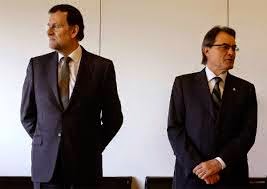
The opposition leader and President Mas. Stock photo
However there are two main obstacles for this scenario. Firstly, the President of the Catalan Government and leader of the centre-right pro-Catalan State coalition CiU, Artur Mas, is reluctant to call early elections if a shared candidature with the left-wing pro-independence party ERC – open to many independents and other parties – is not formed. Secondly, the President of the ERC, Oriol Junqueras, wants to run separately, highlighting the need to debate on social issues and corruption as well. Besides these two official reasons, the approval of the Catalan Government's budget for 2015 is also at stake and it is probably the main obstacle for early elections. 

The CiU needs additional parliamentary support to pass the bill but, so far, the ERC is not willing to do so, despite it having backed the budget in 2013 and 2014. This Wednesday, Mas and Junqueras met and have agreed to increase the contact with other parties and civil society in the coming days. After contacting the different political, economic and social actors of the Catalan society, the two leaders will be meeting again "to compare opinions and views". 
The Catalan Government and the CiU are confident that an agreement will be finally reached. Junqueras stated that the meeting with Mas went "quite well". However an ERC spokesperson also started to accuse Mas of "kidnapping the [independence] process" by imposing a shared list as the condition for calling early elections, since he is the only person who can dissolve the Catalan Parliament before the end of the legal term. Such accusations against Mas have also been stressed by other pro-self-determination parties, such as the Catalan Green Socialist and post-Communist coalition ICV-EUiA.


8 days after Junqueras turned down Mas' offer of running together in early elections, the two of them met this Wednesday at the Catalan President's official residence, the Casa dels Canonges (the Canons' House, in Catalan, since it used to host these clergymen from the adjacent Barcelona's Cathedral). According to sources from both the ERC and the Catalan Government, the meeting went "well" or "quite well". However, the Executive is insisting on the need to form a single "national list" as the condition to call early elections. Without this agreement, Mas would not call Catalan Parliament elections in the coming months, they state. The electoral calendar is therefore Mas' best asset to negotiate with the ERC and the approval of the Catalan Government's budget is one of the main trading elements. Junqueras is optimistic about finding "a way of understanding in order to work on independence and build a fairer and freer country".

The Catalan President officially wants a main pro-independence electoral list because he believes that a single candidature could earn more MPs than separate lists combined, due to its magnet effect and the D’Hondt method. Furthermore, a single list would ease the interpretation of results by the international community, according to him. However, there is an additional advantage for Mas: running together with the ERC would avoid the risk of being overtaken by Junqueras' party and losing the next elections, as several polls have being pointing out over the last few months. Mas publicly stated he is willing not to top such shared list, but he also offered to do so, the option offering him the main guarantees for re-election.

Besides, Junqueras believes that separate lists would earn more votes than a single candidature since each voter could support the pro-independence candidature that better suits the economic and social model that he or she prefers, and therefore no pro-independence voters would feel excluded by a single list. After years of budget cuts affecting public services and manifold corruption scandals, some of which have greatly affected the CiU, the ERC leader thinks that some left-wing and pro-independence citizens would be reluctant to vote for a candidature including the CiU or some of its leading members. However, the ERC has also their own interest in running separately: for the first time in the current democratic regime the ERC has the opportunity of becoming the most voted party and therefore Junqueras could become the next Catalan President. 

ACN

Read more »

2014/11/27

Catalonia calls regional election step towards independence


Independence demo. Barcelona, 2010. [SBA73/Flickr bit.ly/122JaW4]

Catalonia's two main parties yesterday (26 November) moved a step closer to calling a snap regional election they want to use as a proxy for a referendum on independence from Spain.

The region, which accounts for one fifth of Spain's economic output, went ahead with a symbolic independence referendum on 9 November despite Prime Minister Mariano Rajoy blocking such a move in the courts and calling it illegal.

After the vote, Catalan leader Artur Mas, who has been sued for defying a court injunction not to hold it, said he was considering calling an early election if regional parties could unite behind a single banner in favour of independence.

Late on Tuesday, he outlined a plan to create a Catalan state within 18 months with the first step being to build a common electoral platform, uniting politicians.

Oriol Junqueras, leader of Catalonia's second-biggest party Esquerra Republicana de Catalunya (ERC), had initially opposed the offer but on Wednesday said Mas' plan was "a good starting point" that he was ready to discuss.

"We need to seek formulas that add up between all the political forces that want to move towards independence," he said.

While a formal agreement between Mas' centre-right Convergencia I Unio (CiU) and the leftist ERC could be weeks away, the suggestion that they could run together in an early election is a direct challenge to Rajoy and bodes ill for dialogue between the Catalan authorities and Spain's central government.

Rajoy, who had offered to hold talks with Catalonia on financial and tax issues and opened the door to a constitutional reform to resolve its political problems with Madrid, dismissed the idea of a snap election centred on independence as "a step to nowhere".

About 80% of the around 2.2 million who voted on 9 November backed secession, but the turnout was little more than 40%, giving an inconclusive outcome dismissed by markets.

According to an opinion poll published earlier this week in El Mundo newspaper, if a regional election was held today, CiU would win with 23.8% of the vote, ahead of ERC with 22.1%. 

Read more »

2014/11/26

Catalan President ready to call early elections to achieve independence from Spain in 18 months

The President of the Catalan Government, Artur Mas, gave a solemn speech on Tuesday evening in Barcelona to propose the next steps in Catalonia’s self-determination process. “It is time for the definitive consultation vote” on independence to take place, Mas stated after 2.3 million people participated in a symbolic vote on independence on November 9. Taking into account the Spanish Government’s no-to-everything attitude over the last 2 years, the “only tool” to allow citizens to decide on their own collective future as a nation is early elections to the Catalan Parliament, organized within the current legal framework, he emphasized  Mas affirmed being “ready” to call such elections but under a specific condition: parties and civil society organizations have to transform them into a ‘de facto’ referendum on independence, as otherwise there is no need for early elections, he stressed. 

However, Mas highlighted the urgent necessity to become an independent state in order to have “the tools” to improve the lives of citizens and to better fight poverty, unemployment or corruption, after “the Spanish State has let us down” on many occasions. Now,political parties should be “generous” and respected personalities and professionals from the Catalan society should run in a single list that should clearly stand for independence, making other issues secondary, according to Mas. If such a list obtained an absolute majority, independence should be negotiated with Spanish, European and international organizations within the next 18 months. People forming this list should commit to only run once and the Catalan President said he was ready to be this list’s front-runner but also to end it, the latter case ruling out the possibility of his being elected. In these 18 months, the new state’s basic structures should be built and a citizen participation process should be launched to debate the new Constitution. Then, after those 18 months, constituent elections and a referendum to ratify the achieved independence should be called, with political parties taking a main role once again. Mas did not disclose when the early elections should be called but he said that the entire process to build the new state should be finished by the end of 2016. Therefore, early elections should be called within the next 6 months, during which time Mas also insisted that parties have to better explain what the independent state will be like.


On Tuesday evening, the Catalan President proposed a road map for the next two years: early elections to the Catalan Parliament and, if a single pro-independence list get an absolute majority, negotiations to reach full independence in 18 months. Mas recognised that there will be parties that will not recognise the plebiscite nature of these early elections. Hence, he stressed, the importance of running in a single list that supports, without any doubts, the creation of an independent Catalan state. In addition, partisan fights and ideologies ¨should be put aside” for the benefit of “shared ideals”, Mas stated. The Catalan President recognised that the process and steps ahead are “difficult”, but he asked citizens and parties to think of the generations to come and of the “people who gave their lives” in the past to grant Catalans a better life. In fact, Mas highlighted that independence was not an objective in itself but a means to obtain “better” and “more tools” to improve the lives of citizens.

Mas gave his speech in Barcelona’s Fòrum Auditorium in front of 3,000 people. He emphasised that he was speaking “as the President of Catalonia”, and not on behalf of the Government nor any political party. The audience clapped on many occasions during the 1-hour-and-20-minute speech, particularly when he was referring to the Spanish authorities prosecuting him, the need to form a single list, to not call elections if they are not transformed into an independence plebiscite, the promise not to run again after the next elections and the opportunity to build a country with less corruption.

The ERC leader was present

Within the audience, were all the members of the Catalan Government and many representatives from several political parties, business associations and civil society organisations. Among the attendees, the leader of the left-wing Catalan independence party ERC, Oriol Junqueras, was present, which was significant taking into account the increasing speculation that he could run together with Mas. However, there were also important absentees such as the historical ‘number 2’ of Mas’ coalition; Josep Antoni Duran i Lleida, who leads the Christian-Democrat party UDC, the smallest force within the governing centre-right pro-Catalan State coalition CiU. In fact, two days ago, Duran presented his own political platform that supports granting Catalonia more powers within Spain, pointing towards CiU’s likely division.

There was great expectation for Mas’ speech after November 9’s symbolic vote. The Catalan President did not want to rush after the citizen participation process and at that time he announced he was taking two weeks to reflect on the next steps. He also held a round of talks with political parties supporting self-determination to gather their views and proposals. Furthermore, he sent a last offer to the Spanish Prime Minister to negotiate a mutually-agreed self-determination referendum, but Mariano Rajoy rejected the offer. In fact, the Spanish Government has been rejecting all offers of negotiation during the last 2 years and has ignored all the self-determination demands from Catalonia.

The Spanish Government has been ignoring “the absolute majority” for Catalonia’s self-determination

During his speech, Mas made an overview of the Spanish Government’s attitude for the last 2 years, but also of the relations between Catalonia and Spain for a longer period of time. He highlighted Rajoy’s blocking and no-to-everything attitude, he who has rejected all the proposals sent from Catalonia and has not made any proposals of his own to solve the current political problem. Furthermore, Mas stressed how the Spanish Government was talking about the “silent majorities” during the massive pro-independence demonstrations but “was paradoxically ignoring the absolute majority at the Catalan Parliament that supports Catalonia’s right to self-determination”. In fact, in the previous Catalan elections, held in November 2012, 80% of the newly-elected MPs ran promising a legal self-determination vote.

Mas highlighted how Catalan parties had traditionally contributed to modernise Spain since the 19th century and had been essential in crucial moments in to order to pass the main reforms during the last 35 years of democratic regime. However, the times to modernise Spain seem to be over. Catalans have had and are having a permanent desire to govern themselves, which has been expressed on many occasions during the last few centuries. This is as much “a constant of Catalan identity” as was “the belonging within Spain”. However, now both things do not seem to be compatible any longer, as Spain is carrying out a recentralisation process and attacking Catalan powers and language, he said. 

Mas recognised he was skeptical about whether Spain could change, taking into account its attitude over the last few years, starting with the approval process of the Catalan Statute of Autonomy (between 2005 and 2010). In fact, Mas recognised he had almost no hope at all. Nonetheless, “as Catalan President” he will always be willing to sit and talk, and listen to any proposal from the Spanish Government. However, such a proposal will have to be voted by Catalans. “The time for closed-door agreements is over”, he stated, while receiving a round of applause.

“It’s the time for the definitive consultation vote”

Now, the political process that started two years ago with the first massive pro-independence demonstration "has to be completed", emphasised Mas. “We need to know with precision whether there is a majority to build an independent state or not”, he highlighted. “Everybody should be interested in finding this out”, as the current situation and uncertainty cannot be extended over time. With their peaceful demonstrations of the last years, Catalans have earned their right to hold such a vote. Furthermore, with such festive and civic minded-mobilisations, Catalans are already contributing to make the world a better place, said Mas. “It’s the time for the definitive consultation vote”, he stressed.

“Democracy” rules out any violent repression against Catalans and “globalization has torn down borders, also the mental ones”. These are two of the main factors why Catalans can now ask themselves whether or not they want to split from Spain. However, the greatest reason is that “the Spanish State has let us down and is continuing to let us down” on many occasions,stated Mas recalling many events from the last few years. The Spanish State, including the People’s Party (PP) and the Spanish Socialist Party (PSOE), has rejected the proposals to increase Catalonia’s self-government, has been recentralising powers and attacking Catalan culture and language.

Spain was imposing things on Catalonia

Furthermore, Spain is not treating Catalonia “as an equal” but “imposes” things and there is a clear “hierarchical” framework, in which “one orders and the other obeys”. When Catalonia only complains a little, things are fine, but when Catalonia increases the tone of its demands, then repression starts. This has been repeated throughout history and it has also been the case now in times of democracy; hence the great disappointment by a large part of Catalan society.

On November 9, Catalonia became “an adult country”, it “was not underage any longer”. It became a “more liberated country”, “more confident of itself”, emphasised Mas. This “does not mean automatic emancipation”, but it represents “a change of status”, he noticed. And now Catalonia is ready to build an independent country, he pointed out.

The Catalan President was also critical of the self-determination process and highlighted some mistakes that should not be repeated, such as long-discussions about secondary issues and the fact of mixing the roles of civil society and public institutions. However, he also praised the combined efforts of civil society organisations, public powers and individual citizens, carried out in a civic-minded and peaceful attitude. In fact, Mas was asking for a political leadership from the public and democratic institutions and for moving forward in a brave and yet cautious way, combining determination and prudence in the months ahead. The Catalan President warned that the final stages of complex processes tend to be the hardest ones, but he also added that Catalonia has proven to be ready for the challenge.

Mas’ formula for the early elections 

At this point, Mas announced the need for early elections as the only way to continue and take the definitive step in Catalonia’s self-determination process. Parties supporting independence could run in several lists, but at least one wide and shared list should obtain an absolute majority in order to launch the independence negotiations and start building the new state. Mas listed 7 conditions: a single list obtaining an absolute majority; formed by politicians but particularly by independents from the civil society and recognised professionals to build the new state structures; candidates agreeing to only run once; being in office for 18 months and afterwards calling constituent elections and a ratification referendum; that parties would step aside and would run again in 18 months; that the shared list would be funded through a newly-created foundation and donations; and, that the public funds received after the elections would be split between the political parties in order to guarantee their funding during the next 18 months.

The new Catalan Parliament and Government should launch a negotiation process with Spanish, European and international organisations for a maximum time of 18 months. International mediation should not be excluded in order to reach a “fair” agreement “for all the parties”, since this process does not go against Spain and a mutually-beneficial agreement should be reached. In addition, the newly elected Catalan authorities should start building the new state’s structures, such as a tax administration, a social security system, etc. Furthermore, they should launch a citizen participation process to debate a future Catalan Constitution, which should be drafted by a future new Parliament after constituent elections are called. Furthermore, the Catalan Government should guarantee that public services keep running during the negotiation period. Finally, they should call for such constituent elections and a final referendum to ratify the whole process.

ACN

Read more »

2014/11/25

Better together or happy apart?

Better together or happy apart? Independence movements in Europe. Hertie School of Governance // Berlin, Germany 

European experts ask the EU to stop avoiding the debate on the possible emergence of new states

The Hertie School of Governance hosted the first conference of the Public Diplomacy Council of Catalonia (DIPLOCAT) in Germany entitled Better together or happy apart? Independence Movements in Europe, organised in cooperation with this international school of governance. The event was attended by approximately one hundred people, which included, amongst others, representatives from the German Parliament, the Spanish Embassy, students and faculty, who were all able to participate in the ensuing debate.

The conference was inaugurated by Albert Royo, Secretary General of the Public Diplomacy Council, who thanked the Hertie School for its collaboration before giving a brief summary of the current political situation in Catalonia after the vote of the 9 November.

During the first part of the conference, Nico Krisch, ICREA Research Professor at the Barcelona Institutes of International Studies (IBEI) and Fellow at the Hertie School of Governance, explained the margin offered by International law for European independence movements. According to Krisch, the scope for operability is limited, as the movements are not cases of decolonisation or cases where basic human rights are not respected. However, Krisch endorses an approach in accordance with democratic values, whereby the aspirations of a broad majority of a society cannot be silenced. In this sense, the EU should formulate an approach rather than avoid the issue using the excuse that it is an “internal affair”. Krisch ended on the affirmation that the Catalan and Scottish movements are inclusive, not ethnic, more so than the States they aim to part from.

In a round table moderated by Mark Dawson, Professor of European Law and Governance, Hertie School of Governance, Catalan, Belgian and Scottish experts discussed the consequences of a new state within the European Union. Representing a Catalan perspective, Jaume López, Associate Professor of Political Science, University Pompeu Fabra (Barcelona, Catalonia), explained the repeated failures of federalist reforms which Catalonia has proposed to the Spanish state throughout history. He also underlined that Madrid’s repeated refusal of such proposals have caused a rise in pro-independence positions in Catalonia.

Eve Hepburn, Senior Lecturer in Politics and Deputy Director of the Academy of Government, University of Edinburgh highlighted two aspects from the recent Scottish independence referendum. Firstly, as a political leader, you have to respect the democratic will of the people and let them vote. Secondly, as Mr Krisch had also pointed out, the Scottish independence movement was broad and inclusive, which made it especially strong.

Finally, Steven Blockmans, Senior Research Fellow and Head of the EU Foreign Policy Unit, Centre for European Studies (CEPS), and Professor of EU External Relations Law and Governance, University of Amsterdam, asked for more flexibility on behalf of the EU to accommodate regions, and not only to be a club of States. He also spoke about the case of Flanders, where 35 years of constitutional reforms have debilitated the independent movement.

With this event the Public Diplomacy Council of Catalonia continues the series of conferences on the right to decide in prestigious European universities. The cycle started at Sciences Po Paris in June 2013, and continued with conferences in London, Seville, Uppsala (Sweden), Toulouse, Lisbon, Utrecht, Santiago de Compostela, Oslo, Geneva, Reykjavik and now Berlin. Upcoming conferences of the series will be held in Rome and Vienna during the month of December.

The Hertie School of Governance was founded in 2003 by the Hertie Foundation, its main partner. The Hertie School is an international centre, with a variety of first-rate academic projects and a diverse student body. The school prepares students for leadership positions in government, business, and civil society. The Hertie School also actively promotes public debate.

Read more »

2014/11/22

Spanish Government rules out a new inter-territorial fiscal scheme, despite the current one having legally expired

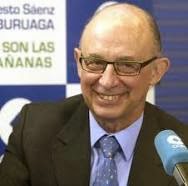
Spanish Finance Minister Cristobal Montoro
On Wednesday, the Spanish Finance Minister, Cirstobal Montoro, refused to start negotiating and launching a new funding scheme for the Autonomous Communities before 2016, even though the current model had to be reviewed before January 2014. The Catalan Government has been insisting on its review since 2012, since the system does not properly fund basic public services such as healthcare and education in times of economic crisis, areas which are entirely managed by the Autonomous Communities. In addition, Catalonia suffers a permanently high fiscal deficit: each year Catalan taxpayers have to give away some 8.5% of Catalonia’s annual GDP to fund services and infrastructure in the poorer regions in Spain, a transfer equivalent to some €17 billion per year. The problem is that after such annual transfers, public services in poorer parts of Spain have more money per inhabitant than those in Catalonia. 

In addition, the Spanish Government does not invest enough in productive area such as Catalonia, which receives investment way below its population and GDP share. Therefore, the public services in Catalonia are under budgeted compared to other parts of Spain and basic infrastructure is not built which slows down the economy. The Spanish Government has been postponing the new model, despite the territorial tensions and the self-determination demands. Now, Montoro has definitively shut the door and Catalans will have to wait at least a year and half more.


In front of the Spanish Parliament, Montoro announced that the current model funding the Autonomous Community government will not be changed in the current term, which ends in one year time, neither he will start negotiating a new scheme. According to the law, the current model had to be reviewed before January 1st, 2014, which has not been the case. The Spanish Government has been postponing the revision with the argument of the economic crisis, saying that now it was not the time since revenue and spending are not at regular levels. In addition, they added that there would not be enough consensus among the different government levels and Autonomous Communities, even though most of them are ruled by the People’s Party, which also runs the Spanish Government.

However, at the same time, the Catalan Government was urging the Spanish Prime Minister, Mariano Rajoy, to do so because basic public services such as healthcare, education and social affairs are under severe stress and cannot withstand further budget cuts without their quality being seriously damaged. Since such services are managed by the Autonomous Communities, which can then be blamed by the citizens, Rajoy has not authorised reviewing the current model.

Montoro repeated on Wednesday that with the current economic context, a change is not possible. In addition, he also argued that the current political atmosphere would make such a change “unviable”, regardless of the fact that the Catalan Government has been requesting it since 2012, almost 2 years before the current model was about to expire. In fact, legally speaking, the new model should have entered into force on the 1st January 2014 and therefore should have been negotiated throughout 2013.

The Finance Minister argued that launching such a revision now would trigger “grievances among Spaniards”. Instead of a new model, Montoro emphasised that the Spanish Government is “sharing the debt” among the different government levels to fund public services. Once again, he defended the Liquidity Fund for the Autonomous Communities (FLA), which issues loans that later individual regional governments have to pay back with interest. This mechanism transforms the Spanish Government into a bank that earns money instead of being a coordinator that distributes resources without taking advantage of it. On top of this, Montoro is presenting such loans as a basic assistance to governments such as Catalonia’s, while at the same time the Spanish Executive does not allow the Autonomous Communities to access financial markets and to obtain alternative funds.

Therefore, Montoro is not allowing the Autonomous Communities to get additional funds, neither does he agree on reviewing their current funding scheme, one that cannot provide enough funds for their needs any longer, and, instead, it issues loans out with which the Spanish Government will make money. Through this system, Rajoy is recentralising power and putting the Autonomous Community system under severe stress. In the current political situation in Catalonia, with demands for independence shared by a large part of society, Rajoy’s attitude is far from easing things and, instead, it adds further tension.

On top of this, the Spanish Government refuses to recognise Catalonia’s historical fiscal deficit and it has been denying it or downplaying it. Such an attitude irritated the main business associations in Catalonia, who urged Rajoy to admit the fiscal deficit and to partially correct it, funding infrastructure that is essential to ensure the competitiveness of the Catalan economy, which is Spain’s main economic engine, leading exports, industrial production and tourism industry.

ACN

Read more »

2014/11/20

Spain’s Public Prosecutor Office to finally file complaint against Catalan President for November 9 vote

The Director of the Spanish Public Prosecution Office, Eduardo Torres-Dulce, will finally file a complaint against the President of the Catalan Government, Artur Mas, for the symbolic vote on independence held on November 9. 
The decision was confirmed on Wednesday and it comes after 10 days of controversy, in which the Spanish Government has been accused of not respecting the separation of powers and of pressuring the Public Prosecution Office to take a political issue to court. Furthermore, Catalonia-based prosecutors and many judicial experts have stated there is no legal basis for such a complaint. November 9’s non-binding participation process had been temporarily suspended by the Constitutional Court on November 4 but the Court refused to explicitly tell Mas he could not organise it, as the Spanish Government had directly requested in its appeal. On top of this, the Constitutional Court did not issue a first warning despite the Catalan Government having stated the vote would take place anyway, neither did it answer Mas’ appeal and request for further explanations before November 9. However, the governing People’s Party (PP) was highly insistent that such a complaint had to be filed. 
Torres-Dulce will finally do it, after meeting with Spain’s main prosecutors, who backed him but not unanimously. Furthermore, the complaint’s scope will be expanded with further felonies and confirms the inclusion of a third Member of the Catalan Government. In the end, the Catalan Vice President, Joana Ortega, and the Education Minister, Irene Rigau, will be also included in the complaint for having authorised the use of public resources and venues (such as high-schools) for the non-binding vote. The 3 Catalan top representatives will be accused of usurpation, disobedience, embezzlement and perversion of a legal process. This complaint will certainly have many political consequences and is likely to strengthen Artur Mas in the eyes of a large part of the Catalan society. It also confirms the increase of tension between Madrid and Barcelona, and the partisan use of the Spanish State’s bodies and institutions by the Spanish Prime Minister, Mariano Rajoy, and the governing People’s Party (PP). 


The judicial complaint that Torres-Dulce will file this week following the insistence of the PP has great political importance, since the Spanish authorities are taking the self-determination conflict one step higher by taking the President of Catalonia and 2 members of the Catalan Government to court. Furthermore, such a step is likely to cause a significant boomerang effect in support of Mas, Ortega and Rigau by a large part of the Catalan society. Many citizens and organisations are likely to stand apart from their main public representatives who co-organised an historical and peaceful citizen participation process, in which 2.3 million people cast an official vote on independence from Spain for the first time in history.

An important symbolic vote

In fact, November 9’s participation process was the first time ever that Catalans were able to directly vote about their belonging to Spain, since the 1978 Constitution had been negotiated with Franco regime’s military and was the only way to embrace democracy and bury the dictatorship. Many citizens, particularly old people who had lived through the Civil War and the four decades of Fascist and military dictatorship in which the Catalan language was persecuted, were thrilled and touched to be able to vote on independence, even if it was in a symbolic and non-binding process run by volunteers.

The Catalan Government launched such a participation process after the Spanish Executive managed to have the original consultation vote suspended by the Constitutional Court in a particularly fast and provocative way that, once again, questions the separation of powers in Spain. Then, in order not to disobey the Court, the Catalan Executive designed this alternative process, which was initially downplayed by the Spanish authorities and many Catalan parties for not being serious enough. The Catalan President acknowledged the limitations of the new way and highlighted that it was far from being the definitive referendum, but he insisted that citizens would be able to vote, “with ballots and ballot boxes”. He also talked about being “astute” and not disclosing all the organisation steps in order to make things harder for the Spanish Government and prevent them from blocking this new vote. In addition, the vote would be run by volunteers, without a pre-made electoral census, although it would be carried out in public venues in an official way.

A vote with wide institutional support in Catalonia and total opposition in Madrid

The main civil society organisations supporting independence backed the new citizen participation process and so finally did the rest of parties supporting the previous consultation vote. Furthermore, 942 of the 947 existing municipalities in Catalonia backed the alternative way and offered their facilities to host polling stations in the event that Catalan Government ones were not enough.

At this point the Spanish Government changed its mind and activated the mechanisms needed to block the new vote from happening. It managed to have the Constitutional Court temporarily suspend November 9’s process, but it was not able to stop the vote from happening in the end, despite it having threatened organisers and participants in the immediate days before the vote and on the very same November 9. The Spanish Public Prosecution Office announced on Saturday, the day before the vote was supposed to take place, that it was opening an investigation and it did not rule out legal consequences. In addition, the Catalan Government’s websites and those of the main pro-independence civil society organisations suffered a massive cyber-attack on the vote’s weekend, which collapsed their systems for several hours. The attack represented 90% of all the attacks in Spain and on November 9 it multiplied by 60,000 the regular information requests to the Catalan Government’s servers.

However, the citizen participation process was a great success, considering all the obstacles and threats, even those sent at the last minute. On top of this, an international and cross-party delegation of observers formed by Members of the European Parliament and other parliamentary chambers certified that the process had been “correct” and “open”, taking place without coercions. They also acknowledged the limitations imposed by the Spanish authorities and the “challenging” circumstances in which it had been carried out, and concluded that it had been “successful”.

Rajoy and the PP are using Spain’s main institutions in a partisan way

Mariano Rajoy and the PP have held an absolute majority at the Spanish Parliament since late 2011 and have been ruling the country imposing their own views without dialogue, including those on Catalonia and Spain’s territorial organisation. In fact, they have been violating the current legal framework by invading the Catalan Government’s jurisdiction on many occasions, by recentralising powers with the excuse of fighting the economic crisis and by refusing to negotiate a new inter-territorial fiscal scheme despite the old one having legally expired and despite all the demands from all business associations from Catalonia and Catalan public representatives. On top of this the PP and Rajoy have begun homogenisation initiatives and have attacked the Catalan language, not respecting the Spanish Constitution that specifically calls for the protection and promotion of minority languages. Moreover, the PP and Rajoy have used their absolute majority to impose a restrictive interpretation of the Constitution and to ignore or downplay the democratic self-determination demands expressed by a large part of Catalans, through many peaceful demonstrations and through the last elections to the Catalan Parliament, held in November 2012. Back then, with a record turnout, citizens freely elected 80% of MPs who ran supporting a legal self-determination referendum.

The Catalan President and a wide majority of Catalan parties have been working to honour that democratic mandate and to grant citizens the possibility to vote on their collective future. The attitude of Rajoy, the Spanish Government and the PP, but also of the Spanish Socialist Party (PSOE) and most of Madrid’s establishment, has been to block any negotiation about self-determination demands for the last 2 years. On top of this, Rajoy and the PP have undertaken a no-to-everything attitude that is looking to quash Catalonia’s demands by KO, in the hope that Catalans will give up on their demands without they are having made any political concession. In front of this, Catalan representatives have agreed not to wait any longer for Madrid to sit around the table and talk about a mutually-agreed referendum. In December 2013, two-thirds of the Catalan Parliament agreed to hold a legal self-determination vote on November 9 in which citizens would answer a two-part question that referred to independence but also to a federal or confederated Spain. They tried to bring the Spanish authorities on board, insisting that the question wording and date could be renegotiated, but Madrid’s blocking attitude continued. It was when the Spanish Parliament refused to transfer the powers to organise a self-determination referendum to the Catalan Government and when the Spanish authorities banned Catalans from using their own legal framework to hold a non-binding consultation vote. However, in the end, they could not stop citizens from giving their opinion on independence on November 9.

A reaction from Spanish nationalism

The image of Catalans casting their vote on independence in a peaceful and even festive way shocked Madrid and most of the Spanish nationalists. Rajoy had repeated that the vote would not happen and finally it did. The most conservative and Spanish nationalist factions of the PP, but also of other parties, criticised Rajoy for being too soft with Catalonia. The Spanish PM took three days to appear in public for the first time after the vote and to make an assessment of it. In front of the criticism, Rajoy downplayed the vote and its turnout, and he accused the Catalan President of having organised an “illegal” process, even though no Court had declared the vote to be “illegal”, not even the Constitutional Court. He also rejected the offer made by the Catalan President to talk about the self-determination demands and negotiate a mutually-agreed referendum.

Before Rajoy’s statements, other members of the Spanish Government and the PP had said similar things. In addition, on Monday the PP already announced that the Public Prosecution Office would file a judicial complaint against the Catalan President and other member of the Catalan Government. The Public Prosecution Office had not made any statement in this regard.

The show of the Public Prosecution Office

This complaint has been a political soap opera that has lasted the past 10 days, in which the PP and the Spanish Government publicly asked the Director of the Public Prosecution Office to act – sometimes in quite a demanding way – and, at the same time, they were hypocritically denying having put any pressure on Torres-Dulce. On Wednesday last week, Torres-Dulce met with his delegate in Barcelona, José María Romero de Tejada, in order to agree on a line to take and gather the support from prosecutors based in Barcelona. They agreed to put the final decision on whether to file the request or not in the hands of the Catalonia-based prosecutors.

Last Monday, the 9 prosecutors that form that highest public prosecution council in Catalonia unanimously agreed to reject the complaint because they considered it lacked legal basis. However, Torres-Dulce announced he would organise a meeting on Wednesday with Spain’s main prosecutors in order to carry it out anyway. With this move, the Spain’s General Prosecutor proved he was putting the decisions in the hands of Barcelona-based officers to gather their support and to pretend that the complaint had been filed for legal reasons and not because of political instructions sent from Madrid. On Tuesday the Catalan prosecutors said they would file the complaint if they were told to do so, since they belong to a hierarchical body. Therefore, the rebellion of the Catalan prosecutors did not become a schism in this basic pillar of the Spanish legal system. Meanwhile, the PP and the Spanish Government were insisting that Torres-Dulce should react and file the complaint at once. On Wednesday, the council grouping Spain’s main prosecutors, from high courts and heading specialised law divisions (many of them belonging to a conservative association) backed Torres-Dulce after a 4.5 hour meeting, although not unanimously. After the meeting, the Director of the Public Prosecution Office confirmed that the complaint would be filed “within this week”.

A complaint against Mas, Ortega and Rigau for 4 felonies

In the end, after speculation about who exactly will be targeted, the complaint will be not only against the President of the Catalan Government, Artur Mas, as the main person responsible for the vote, but also against the Vice President, Joana Ortega, who coordinated the vote’s logistics and announced turnout figures and early results, and the Education Minister, Irene Rigau, who authorised using public high-schools to host polling stations. The will be accused of “usurpation” for having authorised a “hidden referendum” despite not having had the powers to do so; “disobedience” for not having respected the temporary suspension of the Constitutional Court; “embezzlement” for using public money and resources for the vote; and “perversion of a legal process” for carrying out a public administration process in the knowledge it had been temporarily suspended by the Constitutional Court.

However, many legal experts consider that there are not enough legal bases for such accusations. Firstly, the vote was not “a hidden referendum” but “a citizen participation process”, which the Catalan Government has the powers organise. Secondly, it is hard to argue that they committed “embezzlement” by using public resources in a process in which 2.3 million citizens participated, clearly showing the public interest of such a process. Thirdly, according to Spanish legislation, in order to disobey a court the court has to have sent a reminder or a warning, in addition to the original verdict, which was not the case. Finally, “perversion of a legal process” requires public officers to have consciously made an unfair decision, which does not really fit into a citizen participation process run by volunteers.

Related:

In Spain there is no separation of powers, no democracy at all

Download and share
The President of the Court that refuses to allow the Catalans to vote, Francisco Pérez de los Cobos, was a member of the governing party while he was a judge, even though the article 127 of the Spanish Constitution forbids it. He was not dismissed.

In Spain there is no separation of powers. They call it democracy, but obviously it is not. Read more and Download...


Constitutional Court Judge Violates Constitution

Unbelievable but true, the president of the Spanish Constitutional Court Francisco Perez de los Cobos, publicly admitted recently that he had been a member of the governing Popular Party while a magistrate of the Constitutional Court, the Supreme Court in Spain, specifically between 2008 and 2011. He took the oath as a Constitutional Court magistrate on 29 December 2010.
Spanish law bans party membership for judges and magistrates. By law, appointment for such a position while being an active member of any political party is considered incompatible. This is because it may jeopardise the judge's impartiality with justice thus losing its essence.
This principle is established in Article 127 of the Constitution, in Article 395 of the Organic Law of the Judiciary, and in Article 19 of the Law ruling the Constitutional Court (LOTC): "Judges and magistrates may not belong to political parties while they are active". Moreover, the same Article 19 of ... read more...

Spain's Attorney General to Dismiss Catalonia's Top Prosecutor for Backing Legal Ballot

Martin Rodriguez-Sol, appointed in July, said he supported a poll in Catalonia, as long as it was held legally.

The Spanish Attorney General, Eduardo Torres-Dulce, opened proceedings on Monday to dismiss the Chief Prosecutor in Catalonia Martin Rodriguez-Sol, which may end with his dismissal, following his recent statements on a ballot in Catalonia. In a statement, Torres-Dulce cites an article of the Organic Statute of the Public Prosecution referring to the dismissal of an appointee by the central government. In the coming days, Mr. Sol-Martinez will be called to an audience before the Fiscal Council, after which the Attorney General will be informed on the Council's findings and will issue an opinion on the case.... read more...

Attorney General is an example of poor practices by a rather undemocratic State"

  • The Catalan head of government denounces the decision of the Spanish Attorney General, Eduardo Torres-Dulce, to remove from office the Catalan Attorney General, Martín Rodríguez Sol, on account of declarations made by the latter, stating that he considered Catalonia’s aspirations to hold a referendum on its future as legitimate•   According to Artur Mas, “we must respond” to these actions “with the necessary determination in order to defend ourselves as a country and to safeguard our future”.The Catalan president qualified as “an example of bad practices by a State with a poor democratic mentality” the measures announced against the Catalan Attorney General, Martín Rodríguez Sol, on account of his statements regarding the right of Catalonia to self-determination. Read more...

Madrid says 'no' and makes threats with "penal" actions after 1.8 million Catalans asked to vote

The Spanish Government "cannot change its stance", stated Soroya Sáenz de Santamaría, Spanish Deputy PM, on the day after Catalonia's independence supporters peacefully and democratically formed a colossal rally for the 3rd consecutive year. Furthermore, the Director of Spain's Public Prosecution Office, appointed by the Spanish Government, threatened the Catalan President with "penal" actions if he organises a self-determination consultation vote once it has been banned by the Spanish authorities. Read more..


Read more »

People’s Party (PP) rejects the Catalan President’s offer to meet with Rajoy in Barcelona


The Spanish Prime Minister, Mariano Rajoy, is rejecting the offer sent by the President of Catalonia, Artur Mas, to meet in Barcelona, to coincide with the former’s trip to the Catalan capital on November 29. According to Alícia Sánchez-Camacho, the leader of Rajoy’s party in Catalonia, “it is not the time” for such a meeting. In addition, she also said that making the offer in a press conference through the Catalan Government’s Spokesperson “is not the way” of doing things. In a press conference from Madrid, the Catalan leader of the People’s Party (PP) also pointed out that Rajoy is travelling to Barcelona “to attend a party rally”. 
Spanish Prime Minister Rajoy 
and Catalan President Mas (stock photo)
During the weekend, the Spanish PM had announced his trip to Catalonia as being in order “to better explain himself” and talk to Catalans after November 9’s symbolic vote on independence. The Catalan Government invited Rajoy to hold a meeting with Mas as well in order to set institutional dialogue once again. Rajoy is refusing to discuss self-determination and according to Sánchez-Camacho he should only talk with Catalan representatives about the same things he would talk about in the other Autonomous Communities.


Besides, from the PP's headquarters in Madrid, Sánchez-Camacho urged the Director of the Spanish Public Prosecution Office to “defend the law, democracy and the rule of law” by filing the judicial complaint against the Catalan President for authorising November 9’s vote. Furthermore, she also added that “everybody is equal” in front of justice. Sánchez-Camacho announced such a complaint a week ago, before the Public Prosecution Office had said so. In fact, many political parties and the Catalan Government have criticised the PP for not respecting the “separation of powers” and for pressuring the Public Prosecution Office.

Related:

Catalan President Artur Mas offers to meet Rajoy during his visit to Barcelona

Furthermore, the Catalan Executive regrets that the Spanish Prime Minister, Mariano Rajoy, has not made any political proposal in his answer to the letter sent by the Catalan President, Artur Mas, after November 9’s symbolic vote on independence. On Monday evening, Rajoy answered Mas’ letter and highlighted that Spain’s “sovereignty” cannot be negotiated, therefore rejecting the possibility of any discussion about a mutually-agreed referendum on Catalonia’s independence. Coinciding with Rajoy’s trip to Barcelona, scheduled on November 29, the Spokesperson for the Catalan Government, Francesc Homs, stated on Tuesday that Mas “would be delighted to welcome Rajoy at the Generalitat Palace”. Read more...

Read more »

2014/10/28

The EU will be “pragmatic” and not kick out an independent Catalonia say experts in Sciences Po


CATALAN NEWS AGENCY – They also highlight the importance of “international recognition” for the process of acceptance of an independent Catalonia within the EU

The European Union will adopt a “pragmatic approach” and employ “common sense” in the case of an independent Catalonia or Scotland and would not work to expel them, according to experts gathered at a conference on self-determination on Friday at the prestigious Sciences Po University in Paris. At the conference, which was organised with the support of the Catalan public-private soft diplomacy council Diplocat, experts highlighted the importance of “international recognition” for the process of acceptance of an independent Catalonia within the EU. Graham Avery, member of the Brussels-based think tank European Policy Centre (EPC) and Honorary Director General of the European Commission, said that the EU “has no problem in accepting changes in the borders of states”, but that it has never experienced a secession which would create “two new member states”. The conference also featured a panel discussion on the philosophy of the right to decide upon self-determination within the EU, which involved experts on the subject from throughout Europe.


The conference was held in Paris’s Sciences Po university this Friday with the goal of furthering the political debate about the Catalan self-determination consultation vote, which is due to be held on the 9th of November, and the Scottish Referendum, which will take place on the 18th of September. The discussion aimed to explore their implications for the EU. Experts debated the differences between an independence declaration, a proclamation and, above all, the international recognition process. They emphasised that the international acceptance of a hypothetical new state would vary depending on the international organisation and how the independence process had taken place.

Welsh academic Graham Avery, who wrote a report on the issue for the British Parliament, said it would be “absurd” for Scotland to leave the European Union. He stressed that there would be a “pragmatic” solution applied to an independent Scotland which would employ “common sense” to negotiations, so that the new state could be accepted into the EU. For Avery, the agreement between London and Edinburgh would make this process far simpler than in the case of an independent Catalonia.

Catalonia’s entry into the EU dependent on Spanish acceptance

Professor of International Law at the University of Girona, Francina Esteve, explained that the accession process of a hypothetical independent Catalonia would depend largely on the extent to which the Spanish Government would accept the new state. “If Catalonia could reach an agreement with the Spanish Government, like in the case of Scotland and the United Kingdom, it would facilitate Catalonia’s entry into the EU. However if they didn’t, it would complicate things”, she said. According to Esteve, “the EU does not encourage the emergence of new states” but “secession is not prohibited as such”.

Francinia Esteve also commented that, “there is no international standard that explicitly prohibits unilateral [independence] declaration” but that it is important to recognise that each case depends on “how the process has been done”. She also commented that the attitude of the original state could affect the international recognition process, as well as whether the new state has “allies”. “The EU has traditionally adopted a pragmatic attitude” she said. The Professor warned that “if Greece could destabilise the EU, so could Catalonia, which is not what the EU wants”.

“Maintaining the status quo can also mean instability” if the Catalan conflict is not solved

The Head of the Research at the German Institute for International Security Affairs, Kai-Olaf Lang, said that the EU tends to defend “stability”, which is often linked with the status quo. “This is the problem because maintaining the status quo dos not necessarily mean maintaining stability”, he said, warning of the risks of having a “permanent conflict with the member states”. In this respect, the expert admitted “maintaining the status quo can also mean instability”.

Lang also commented that there was a remote possibility that the EU or its member states could attempt to intervene in the Catalan process if there was no option of a consultation vote. However, the academic was sceptical about this possibility, noting that in cases like this the member states were hardly ever “active”, in order to prevent being caught up in another state’s internal affairs.

If Spain does not recognise an independent Catalonia, it would automatically continue within the EU

He also explained that the type of recognition a hypothetically independent Catalonia would receive would affect how easily it would be able to enter into the EU. In fact, Lang has warned of a potential scenario which would see Catalonia “in limbo”. In this situation Catalonia would “look like a state in all aspects”, and would have all the benefits of being a member of the EU, but it would not have been officially recognised as such.

“If an independent Catalonia is not recognised by Spain, it would mean that the country has not left the EU from the point of view of Spain and the EU”, he stated. In this case “it is not only the citizens, but all of the territory that is part of the common market, the Schengen agreement and the Eurozone”, Lang remarked. He went on to say that this implies that, firstly, Catalonia could not be expelled from the EU, but would instead be recognised as an independent state and, secondly, that Spain might want to “prolong” the situation and it would not be “catastrophic”, rather it would be an action of “pragmatism” for Brussels. According to the German professor, this model would “specifically guarantee economic interaction” but, at the same time, “prevent new states from being full members of the EU for a long period of time”.

A panel discussion with a range of experts

The conference also featured a panel discussion on the philosophy of the right to decide upon self-determination within the European Union, which included the participation of: the Professor of Political Science at the University of Quebec, Alain-G Gagnon, the Director and Professor of the Paris-Sorbonne University, Gérard-François Dumont, the Professor of International Public Law at the University of Barcelona and the Director of the Chari of MADP (mobile application development platforms) at Sciences Po, Jean-Bernard Auby.

Read more »

How to obtain independence legitimately


The difference between separatists in Crimea and the east of Ukraine and the independence movements in Western Europe

Once again there is an air of crisis across Europe. Firstly, the euro-crisis is returning, as growth falters in the major economies of the EU – Germany, France and Italy; and recovery in the hard-hit southern tier of the EU is thus proving even more difficult. Secondly, events in Ukraine have shattered any remaining illusions that the post-Cold War world was one in which democracy and economic liberalism reigned supreme, and in which all major countries played by the same rules, within the familiar structures of world order, established progressively since the Second World War.

Mr Putin has made it abundantly clear that he does not subscribe to these ideals, or to these ways of behaving. The countries and peoples of Eastern Europe are rightly worried about their security. Those of Western Europe have been shaken from their complacency, but are proving slow to adapt to the new, more threatening – and more expensive – reality.

A number of Governments and commentators draw the conclusion that this is not the time to, as they see it, add to Europe’s worries by taking seriously the movements for self-determination in Western Europe, be this in Scotland or Catalonia. They maintain that such movements are propelled by the economic crisis, and point to the Ukraine as an example of the evils of secessionism. This is to analyse wrongly what is going on in Europe, and hence to draw sloppy and wrong conclusions.

The self-determination movements in Western Europe are not fundamentally about money – although unfair fiscal arrangements are often an irritant. These movements are fundamentally about a better representation of their citizens’ distinct interests and a better accommodation of these ancient nations within the European Union. In other words, about a higher-quality democracy. The re-emergence of these strong movements has more to do with the emergence of Western Europe from the political constraints of the Cold War, and, above all, the establishment of the framework of European integration. In the case of Catalonia, it is also stimulated by the fact that the movement from dictatorship to democracy in Spain was not accompanied by the promised greater freedom and democracy at the regional level, as well as the due respect and protection of its cultural and linguistic singularities.

Moreover, the contrast between what is happening in Western Europe and events in Ukraine could not be clearer. By supporting Ukraine, the countries of Europe are seeking to uphold the principles of democracy, the rule of law, peaceful resolution of conflict, and the illegitimacy of changing borders by force. The separatists in Crimea and the east of Ukraine, and their Russian backers, subscribe to none of this. They have sought to secede by force of arms and subversion of the state. It is an ideological as well as a security conflict. The Pro-Russian Ukrainian separatists can never achieve the international legitimacy they want because of the means they have chosen to assert it, and the unacceptable values which these means lay bare.

Meanwhile in Western Europe, pro-independence movements are seeking to advance their causes using the democratic principles and processes so absent in Ukraine. The people of Scotland have just ended a two-year referendum campaign, and voted in record numbers on their political future. The Government of the UK, in accordance with the same democratic principles, committed themselves in advance to implement the results of the referendum. The Governments of Europe should be using this forcibly as an example to the Russians of how things ought to be done – of the legitimate way to resolve deep-seated secessionist issues.

Such processes are not a diversion from the ideological battle with Russia. They can help fight that battle. Unfortunately, however, the Government of Spain is undermining this, by refusing to address the political issue of self-determination with the political tools furnished by democracy. Instead, they are using purely legal arguments and processes to frustrate the expression of a people’s will. In the long run, this is not sustainable. And it is barely credible that an important West European state should act in this way at this time.


Help Catalonia is an association that receives no subsidies whatsoever from the Spanish state, the Catalan government or indeed any other organisation. We, the people who work in this project, do so on a voluntary basis and for no financial gain whatsoever.
If you like the task we are performing and would like to help us carry on our undertaking you may make a donation through bank account No. IBAN ES69 0049 4751 4421 9506 0811 .
Or you may also make a donation via PayPal clicking the button "Donate" .

Read more »